Mushin: No Intention


http://www.budomart.com

image

無心, mushin (no intention, no thinking) is one of the many concepts we encounter when walking on the martial path.

I was reading recently a quote from Sensei where he explained that “During the times of the warring states in Japan, everyone was like a wild animal. Everyone would react to whatever you intended to do. So the only way to win was to have no intention”.*

Having no intention is quite a paradox when you imagine yourself being caught in a fight but becomes logical when you are actually fighting. The time to think is not available, chaos unfolds very rapidly and your reactions are only what remains from training your basics for many years.

You can know many techniques intellectually, the history of a given Ryûha, but nothing prepares you better than studying your basics thoroughly. Learn the taijutsu techniques, learn the weapons but trust yourself when it comes to survive. A book will never fight for you, you will.

This is why the bujinkan is so different from other martial art, it prepares you to survive not to collect waza. Sensei often says negatively that many teachers are “collectors”or “scholars”,  and this is not what he is teaching. In fact we learn them to forget them. Staying at the collecting level is for “kindergartners” he said once in class.

If knowing the techniques is an important step in your progression, it is your 器, Ursula (ability) that makes the difference. And this ability can only come from the deep integration of basics within your mind and body.

Your sole intention should be to have no intention and to rely on Shingin Budō. Let the natural flow guide your actions.

______________________
* Hatsumi Masaaki in “Understand? Good. Play!” book by Benjamin Cole ISBN 0-9710849-5-5
http://www.bushinbooks.com/testimonials.html

http://www.budomart.eu

Soyez les bienvenus à Paris


http://www.budomart.com
http://www.paristaikai.eventpages.org
image

I cannot believe that the Taikai will begin in only  9 days.
This will be another chance to meet with friends from all over Europe and to exchange with the shi tenno.

As I’m not a football fan,  I didn’t know that this world event could damage the Taikai. This year, I don’t think we will reach the 
100 practitioners.

This is not a good news for me, the organizer, but this is good news for you as it means that the groups will be smaller in size giving you a chance to get the best advice from each one of the shi tenno.

Also,  this year with four training halls (the dojo has been renewed) the classes will be easier to attend to.

Each day we will have private classes with each of the shi tenno and a joint class together.

Training will begin at  1000 and end up at 1730 and will consist of 4 private classes by level and one joint training. The four groups will be decided on day one as usual. 

Group 1 will regroup the high ranks, 
group 2 the black belts / Shidôshi, 
group 3 the advanced Kyû and shodan,  and
group 4, the beginners.

The Paris Taikai is the only seminar that I know where this splitting by technical level is done,  and this allows the teacher to adjust his level of teaching to every level. I’m sure that you will appreciate.

Sunday afternoon after training we will have a “party” in the dojo.

I’m eager to welcome you all in Paris for this  11th edition.
______________________
If you didn’t register yet please do it now at http://www.budomart.eu  AND don’t forget to fill in the form HERE we need it for making this event a success.

HERE

Kunreshimasu vs Oshiemasu


image

Today I want to speak about training 訓練 (kunren).

I was reading my notes from the past years and I stumbled upon a discussion I had with Sensei back in 2010. We were having a coffee at his place and he said: “Arnaud you have to teach what you have to teach, and to train what you have to train.”

There is often a vast misunderstanding between 教えます Oshiemasu,  teaching, and 訓練します Kunreshimasu, training.

The kanji 教, means teach, but also faith, and faith is something you have or not. There is no training to get it,  you can develop it if you have it.

Conversely 訓練 is composed of two kanji 1) explanation, instruction; 2) connect, take along. This is therefore something that requires time and effort if you want to get it.

訓練,  forces you to test everything for yourself. A book, a video, even a Densho (if you can read it) are not enough. You have to internalize the form in order to make it yours and this requires a real training. Often I’m surprised to see that very few high ranks put themselves out of their comfort zone. If you want to excel you have to take risks and the first one is to destroy the techniques and test alternative interpretations. This is a permanent “trial and error” process. Obviously you will often fail, but at the end you will build your own taijutsu, the one that is made for your body.

I remember one day asking Senō sensei how he gained his precise movements. His answer was amazingly simple. “I trained all the basics in slow motion changing the angles degree after degree until I knew the best way to do it” he said. I commented that it must have been a very long study. “about 5 years” he said.

Today many teachers don’t really train, they teach. And this is sad because Shingin Budō don’t need techniques but demands that you keep a “student ‘s mind” in order to have a chance to be “guided” by the divine martial winds. Train the movements for yourself and find your own answers,  then, when in Japan, ask for correction. As you know there is no good or bad way of doing those techniques, but there is a truth hidden within and this truth unfolds when you stop teaching and seriously train.

I found out that by saving the last twenty minutes of the class for me, I could train much more while officially teaching, maybe you should try it.

Bûfû Ikkan (keep going)

Feeling is Art


Steve Olsen in his beautiful book “Masaaki Hatsumi Dojo Art” dedicated to Sensei’s calligraphies explains that:
“Sensei teaches at a level beyond technique. “Feeling” Sensei often reminds us, is what is most important. And how can a feeling be taught? Art. It’s up to us to learn technique and transcend so we can apply his art in our lives. That, in my opinion, is the proper purpose of our training. ”

Nagato sensei in a recent class said that learning this art follows (or requires) a three-step process.

We first learn “consciously” the technique. Then with time, we do it “unconsciously”. Until one day we do things “miraculously”. This miracle is the essence of Sensei’s art and it is only about feeling. This is the transcending of the forms that Steve explains in his book. Without the ability to transcend the forms, the Bujinkan is not better than any other martial art.

Many practitioners get lost in the sterile learning of forms and never get past the unconsciously level. Learning the basics allows one to move from level 1 to level 2, but level 3 is only achieved by those who let their feelings guide their movements. Shingin Budō is this guide and the Kehai wo yomenai (see previous post) is the best way to reach natural movement.

術: jutsu, is art.
感覚: kankaku,  is feeling.
神機: shinki, is miraculous.

Therefore, bujutsu (fighting technique) is 術 jutsu (art) guided by 感覚 kankaku (feeling) is 神機術 shinki jutsu, a miraculous art.

So learn your basics thoroughly and train hard until your feelings allow you to enter the world of art.

Kehai wo yomenai


気配を読めない

image

As an add-on to this year’s theme,  Sensei show recently about acting in such a way that the opponent is not able to perceive you,  or 気配を読めない, “kehai wo yomenai”.
When you look at the kanji you get:
Kehai けはい indication, sign, hint, presence,
Yomenai 読め ない to read.

Don’t let yourself be felt

Budō Taijutsu is not sport and even if facing a fighting situation, it is important that Uke dismay feel your intentions. This is why or reactions are created as a reaction to Uke’s moves. There should be no preconceived movement. Only a natural adaptation to a given situation.

Be zero

For thirty years I’ve head sensei say that we have “to be zero”.  This “zero state” can be achieved only if you do not plan your movements. If you don’t know what you are going to do next, how do you want Uke to read it? To be zero is the most difficult thing to do and comes naturally after many years of training. Being zero can only come from mastering your basics as they get ingrained in your movements to become natural. Don’t think, train your basics deeply, and maybe one day you will be zero.

Art of killing without uke feeling your presence

Kehai wo yomenai is the extension of Shingin Budō where our moves are guided by the divine. We can get rid of the threats by letting or actions be guided by something (someone?) way above our limited perception of reality. Becoming only a tool we have their no presence and Uke is controlled by kûkan.

PARIS TAIKAI 2014


PARIS TAIKAI WEBSITE

shitenno
The Shi Tennô long long time ago 😉

PARIS JULY 11, 12, & 13, 2014

The Yûro Shi Tennô Taikai of Paris is beginning in a few weeks. As for the last 10 years, Pedro, Peter, Sven, and Arnaud will share their understanding of the theme of the year decided by our Sôke in Japan: “Shingin Budô”.

This year we will have 4 training halls instead of 3 as our dôjô has been totally renewed. The system is the same with 4 groups of practitioners divided by ranks in order to meet each level of understanding.

As always, lunches (regular or veggie), t-shirts, and certificates are included in the price. You can sleep for FREE at the dôjô (precise it in the FORM) and do not forget your sleeping bag.

If you register before June 10th you get an immediate discount of 20%. It will then go down to 10%. So if you are planning to join us please don’t wait to register. The prebooking is 68€, the remaining is to be paid on arrival.

Once registered please fill in the FORM in order to help us make a beautiful event for all of you.

We are expecting around 120 practitioners from all over Europe, we are happy to welcome you in Paris for our National Day of July 14th!

Esprit du Geste


Esprit du Geste

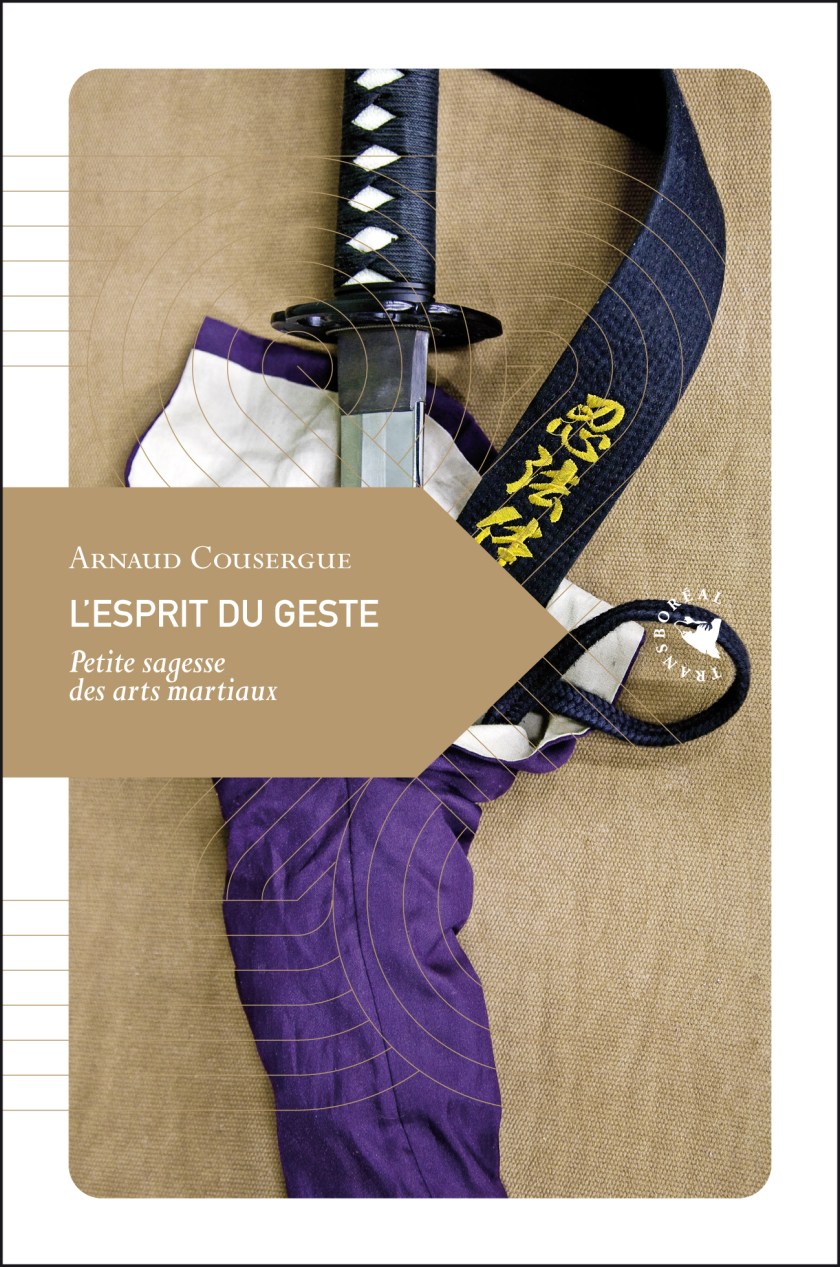
Transboréal, mon éditeur, vient de republier mon livre sur les arts martiaux et sur mes rencontres avec Hatsumi Sensei depuis plus de 20 ans.
Ce petit livre qui s’est dejà écoulé à 3500 exemplaires revient avec 2000 copies de plus.
Il est en vente à la FNAC, Nature et découvertes ou directement sur www.budomart.eu

Shingin Budô? No! Shining Budô!


Shingin Budô? No Shining Budô!

We had a 1-day seminar in Bonn last Saturday and we studied the “nagare” or how to put flow into the 1, 2, 3 techniques. It was fun and demanding but I really appreciated this day of training. Firstly because students came not only from Germany, but also from Belgium, Spain*, and India**.

So even though the theme of the year is about “Shingin Budô”, I lived that day as Shining Budô, with the good feeling with which we trained during the 6-hour training day.

Thank you all to have joined us! And I hope to see you again for our next seminar at the Kurage Dôjô in Munich on March 15th-16th***

(a special thank you goes also to the “viking” who suffered (see picture) more than any other participant)

*Ralf is a student of Juan Manuel Serrano but lives near Strasbourg.
** Arjun is a student of Shiva but lives in Berlin for a few months.
***kurage seminar

koi members: New upload


koimartialart.info

_DSC0148We have uploaded two dvds on biken jutsu for our Gold members on our sister website koimartialart dedicated to online streaming.
Enjoy!

You prefer to get the real DVDs? here


Budomart new URL www.budomart.eu

Not Wanting, In Order To Get It!


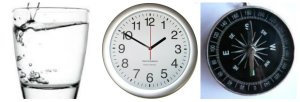
collage_glassclockBeing a student of the Bujinkan Martial Arts system is not easy and requires a lot of commitment. You have to keep the connection with everything, learn, memorize, and always be eager to improve your skills. This is a long path but it is worth it.
The life of a Bujinkan practitioner can be seen as a glass of water in which you pour the desired quantity of liquid. The water level in the glass will only depends on you.
If you want to drink water, you will have to define three things:
How much water do you have in the jug.
How thirsty you are.
How big the glass is.
If we compare the glass of water to training, we can see the Bujinkan martial arts like a huge jug of water. First you have to understand that it is your responsibility to “drink” it (and not your teacher’s).
A teacher is like the jug of water. A sensei is an older practitioner who has been thirsty long before you (see the meaning of sensei)*; and who learnt to quench his thirst. Because he “experienced” this, he is now capable of explaining it to you. But if you are not thirsty or committed to learn, you will not drink. Whatever you chose to do is always your choice. Your sensei will not be thirsty for you.
Your brain can “drink” more than you think as long as you believe you can learn and improve. Even if you have a small glass you can learn a lot, you simply have to refill the glass many times until your thirst is satisfied. But to be satisfied requires high expectations. Sadly many students stop training after black belt because this is what they wanted (low expectations). But Shodan is nothing, it is only the beginning. Be thirsty!
This “water sanshin” of  the “jug-thirst-glass” is another way to understand the concept of Sainô Konki (ability-soul-container). The soul wants to drink and prepares the glass (container) to receive the ability (water) through long training because the path is long.
The Bujinkan path follows three steps:
1) learn the basic forms (kihon, waza);
2) turn them into situations (kata),
3) in order to forget them and to be yourself.**
Before forgetting the forms you have to remember a lot of them. Your kamae (attitude) in that respect, is important. If you don’t pay attention to the details and go with the “in ninjutsu we can do anything we want” that we often hear, then you will go nowhere. You have to be curious of everything. As Richard Whately said “Curiosity is as much the parent of attention, as attention is of memory.”
Without curiosity/attention/memory you will simply mimick the movements and never reach the ura of things. What Hatsumi sensei is teaching
us is not a set of techniques but an ability to discover and understand the world by ourself. This is why kokoroe is vital. You have to learn and memorize.
Everyone one of us uses clocks, watches, or a phone to know the time, but when those tools are missing (or more likely when the batteries
are dead) do you know how to estimate the time and direction like a real ninja?*** I guess not: this is what “curiosity” is about, always having a “plan B” for everything you do.
When in the army I learnt those things, and even today where GPS devices are available, we still train with the compass and the map.
This the “just in case Murphy was right” attitude.****
In the Bujinkan we have a huge collection of techniques (our “jug of water”).
The techniques are first taught as basics in the Tenchijin. This is our compass and map. But then the second step is to learn them “anew” in their  original Ryû. Now, even though some of  these fighting techniques are included in the basic Tenchijin that we studied, they change completely when reinserted in their original system. A Ryû presents the waza in a very specific order because in each level the second technique is the evolution of the first; the third of the second etc. Ignoring that will get you misled and you will never get the kokoroe***** of fighting in this specific system.
One you have done that with the Tenchijin and the Ryûha, and with the weapons you are entering the third level of training where things are not decided but come naturally to you. You have learnt to surf the flow of possibilities and became able to survive by your own ability. But until you reach this third level, everything you will try to do will be unnatural, forced and lack nagare. Someone once said: “How is it one careless match can start a forest fire, but it takes a whole box to start a campfire?”. And this is exactly where you will arrive if you forget before studying; think before act; and want before accepting the natural flow of the Universe.
The Universe is there to serve you as long as your ego is not in the way. Stop with the “I want to do a natural technique” and move to “I flow with nature”. Remember the concept of 真如, Shinyô (the ultimate nature of all things)******
_______________________________________________
*先生, sensei means “the (one) born (in the art) before (you).
** do you remember the last glass of water you drank? no, once you drank it, you forgot about it. Techniques are the same, you learn them to forget them more efficiently.
*****kokoroe is knowledge (see previous posts)
******Shinyo (tathatâ in sanskrit).  In “Advanced Stick Fighting”, book by Hatsumi sensei, P38, Kodansha Edition or the definition here http://en.wikipedia.org/wiki/Tathat%C4%81