Bô: Kûkan & Distance


Distance is power

Bô jutsu is one of the key to enter the kûkan as it gives access to distance. Too often in training we  are trapped by the form (waza) and do not dwell enough into the feeling (kankaku). When sensei introduced us to the “cycle of weapons” in 1993, many bujinkan members were surprised as jutsu did not seem to be “ninja” enough to them.

But bô jutsu was only an excuse to excel. Bujinkan is footwork. When we train the , the technique traps our brain and our movements follow a “1, 2, 3” sequence. After repeating those forms long enough, something fresh comes out of them. Through mechanical repetition the brain frees itself and a natural movement is created only because footwork adds itself to a new understanding of distance.

In one of the bujinkan schools, it says: “ahead lies paradise” meaning that in a fight you get protected by entering the distance to the opponent. By accepting the encounter, you actually enable yourself to be safe and free in your actions. This knowledge of how to distance yourself correctly is the first thing you learn with the use of  long weapons. This freedom has created a kûkan of which you were not aware of before. Through the study of bô jutsu you are now able to enter this kûkan and bring your taijutsu up to a new dimension.

Weapons are our best teachers. We move our bodies and we now learn to do it with an artifical extension offering new possibilities.

Bô jutsu is not “ninja“? maybe not, but our skills improve a lot through this type of study. We understand now distance and angles in a wider sense and can play freely with a new created space.

Maybe this is why divinities are often represented with a long staff. 🙂

Kukishin Bô Jutsu Shoden


old bô jutsu drawing by hokusai

Did you ever notice that the three levels of bô jutsu from the kukishin represented the three levels of the ten chi jin?

Did you ever notice that in the shoden no kata you had 3 groups of 3 techniques? Each name of technique begins with the name of a kamae followed by the principle hidden within each one of the groups. 

Those principles can be written in different ways, I offer here three possible meanings.

The first group deals with kangi which can have the same meaning of ” intuition, sixth sense” (gi means waza = technique). kan (勘)

The second group is gogi and can have the meaning of go(shin), “defense”. Go (護).

The third group is kôki and can have the meaning of “achievement, success”. (功).

If we add those three meanings we get the idea the the first level of the kukishin bô is to develop our intuition to defend ourselves in order to find success”.

Funnily, the last technique (the ninth) of the level look like a mix of all the waza studied in the level. If not in the form at least in the feeling.

The last technique is called tenchijin… 🙂

Sticks Up Today!


Takamatsu sensei

In a few minutes we will begin our seminar in Bangalore on kukishinden ryû bô jutsu.

The kukishin bô is amazing and always a pleasure to rediscover: the kotsu, the kamae, the bô no uchi, the gogyô no bô, the three levels of shoden, chûden, okuden and the devastating keiko sabaki gata.

Bô jutsu is the essence of the long weapons in the bujinkan system. This is the entry gate of the sanshin of bô, yari and naginata. Rokushaku bô can be seen as reaching consciousness (roku = 6th = consciousness) through the linking heaven and earth. Maybe that is why we began weapon training in 1993 with the

The weather is nice even though humid, the camera crew ready, the sticks polished, the 9 demons can enter now into the arena.

A good time is beginning!

🙂

Elegance is an Attitude


What can you add?

In the airline’s magazine I was flipping the pages when I stopped at an add presenting a beautiful Indian woman with a caption reading: “elegance is an attitude”. Immediately it made me feel happy!

Wherever you go you have to be aware of the connections between jissen (true life) and jissen (true fight). The world is our training ground and coincidences are there to teach us something.

We explained that yûgen is the invisible world rendered visible and that it is the Japanese word for elegance. We also discussed the word kamae as being more an attitude than a simple body posture.

This caption in a bujinkan understanding could be the following: “yûgen is kamae“. When your basics are assimilated and your body flow created, your attitude towards life becomes elegant. Elegance is not something you can ad by yourself; elegance is not omote, it is ura. It is something that is born from your being and that spreads around you like a perfume. There is no technique to learn it, elegance comes naturally when your attitude is correct.

The beauty of the bujinkan system is that through a long and strenuous training period you reach this level of elegance. You don’t do things because you want to but because  you are true to yourself.

🙂

Indian Touchdown


With Shiva and Nandita in Japan

I arrived yesterday in Bangalore for a long Bô jutsu seminar after a long flight. The monsoon is announced and humidity is rising. Hot trainings in perspective.

On the dvd front, Shiva told me that the new buki waza dvds are ready. I’m bringing them back with me so check budomart regularly.

Here we will train a lot and record the whole bô jutsu, gyokko ryû shoden, and mutô dori.

I keep you informed in the following days.  🙂

Imagination


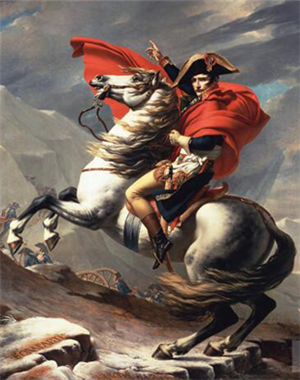
Napoleon Bonaparte

The greatest power we learn in training in the bujinkan is to develop the power of our imagination. This is the kaitatsu explained in a previous article.

Napoléon said that: “Imagination rules the world” and if it was true for him it is definitely true for us too.

The bujinkan seen as an educative system is helping us to get rid of our preconceived ideas and to find new ones. Often when I meet a bujinkan student in  a seminar I am amazed that first he (or she) never heard about the Ten chi Jin Ryaku no Maki created by Hatsumi sensei and second that his (or her) vision of the art has nothing to do with the reality of training in Japan. This is never the fault of the student nor of his teacher but of the teacher of his teacher who often joined the bujinkan after many years of gendai budô. These first teachers  never ever reconsidered their previous knowledge to adapt it to the new set of rules. This lack of foundation explains the poor level of imagination in the bujinkan. The bujinkan will transform you if you train the basics properly.

Through these foundations, you will develop the power of your imagination and become an artist able to rule the world.

Be happy (imagine)

YSTT: Register Fast!


book yourself rapidly

YSTT Update 2:

Another 12 persons registered this week-end.

So please if you wish to attend the YSTT 2010 and train with Pedro, Sven, Arnaud, and Peter do not wait too long as places are limited.

At this rate (3.4 persons per day) the prebooking for the YSTT 2010 (limited to 120 participants) will be closed by June 9th…

… too bad 😦

YSTT Team 2010

I need your help


new logo?

Dear buyu,

Solkan Europe, the company offering http://www.budomart.com, has been using the same logo since the last Paris Taikai I organized for sensei in France in May 1997.

After 13 years it  is about time to renew the look of my company so I am redesigning the  www.budomart.com website.

I am looking for a new logo for Solkan Europe and I would like to ask for your feedback on this.

On the left is one logo that I was given today, please help me so that I can make up my mind.

Do you like it or not?

Thank you,

Arnaud Cousergue

Tips & tricks (7) Tachi Basics


FREE MOVIE DOWNLOAD at www.koimartialart.com

Those of you who have registered to www.koimartialart.com can now download a small MP4 or MOV movie (338Mo) about the tachi principles that we studied in Japan since January. This movie lasts 30 minutes.

Disclaimer: the techniques demonstrated are based on my interpretation and understanding of the tachi kumiuchi. It was recorded with a small camera it is not DVD quality but gives you tips & tricks on how to move your tachi.

Have fun! 🙂