Ryaku. Waza. Kata


wpid-20130730_122758.jpgWhile teaching in India it occurred to me that the Tenchijin is a set of RyaKu not techniques. The Japanese language makes a difference between the way a,  技 (technique) and the Kata 型 (model, arrangement of techniques).

Ryaku 略 has the meaning of “abreviation” or “outline”. This means that the Tenchijin is not about techniques but is a group of outlined forms and model, leading to the understanding of the essence of techniques.

This is maybe why at the end of the Tenchijin it is said that “there are no fundamental techniques” in the Bujinkan.

Thinking deeper in the system we can also see that the three parts composing the programme are in fact defining a new Sanshin:
The Ten represents the learning of footwork;
the Chi exposes the biomechanical aspect of waza;
the Jin then being the mix of the first two parts and displayed in the form of Kata taken from the 9 ryūha.

The concept of Ryaku makes it much more easy to reach the natural flow shown by sensei.

Don’t make dead forms from the techniques and models of the Tenchijin, let them free to adjust naturally to the flow of things.

Kantan Desu


image

This has been a tremendous trip this time again and I have enough to study and train for the next four months before I come back.Today was my last class with Sôke and because of that I was asked to open the ball, in fact the first five dances were for me.

It is pointless to repeat here that after each technique I did, his interpretation was far beyond my understanding. He always does it, and I’m always hoping that his movement will be reachable. It’s not.Being uke with sensei is like going back to kindergarten. Nothing to feel, nothing to understand, only the feeling that attacking him was really a bad idea. No strength from his part, and no chance of survival from mine.

Luckily sensei speaks a lot. And today (but also during all the other classes), he spoke about Juppô Sesshô no jutsu. Since 2003, and the sanjigen no sekai we started the Juppô Sesshô cycle. This cycle is still on and it is really the highest form of expression of budô. I wonder how many other material arts teachers have mastered this superior form, no one other than Hatsumi sensei I guess. Nagato sensei commented that Takamatsu never taught sensei any of the Tsurugi, but he told him that when the time come, he would know how to deal with this weapon. Takamatsu sensei was right.

Commenting one of his movements Sôke said that he was zero and that zero is ten, which in turn is Juppô Sesshô. “Zero is ten” means that after nine we go back to zero (10 = 1 + 0), this is a new beginning (like with the 42 cycle – read previous post).

By being zero in the movement you can adapt to any change in uke ‘s attitude. By not having any intention yourself, by being zero, you can overcome any attack without strength, or speed.

Sensei added that the use of strength and speed was a “childish conception of martial arts”. Real budô is about moving naturally, walking without hurry. Slow motion is the essence of budô. This is particularly true when the same taijutsu techniques are applied with weapons. And today we also used both the bô and the Tsurugi with the same taijutsu movements.

During the morning class, Nagato sensei repeated once again that in budô we don’t try to make it look good. In a real fight it is simply about efficiency. And if it looks good, it’s a bonus.Kûkan is everything and sensei said that by changing the angle of our footwork, we can increase the Kûkan. Space and timing define Kûkan. Then in this new increased Kûkan, the weapons can be drawn easily. In taijutsu close distance is possible but when dealing with weapons, our distance must be adjusted to the size of our weapons.

The Bujinkan is a fantastic martial art system, and it is quite simple after all. But to make it simple, in appearance, is quite difficult.Today, the last class with sensei was simply a difficult one.

In the morning, Nagato sensei, with a smile on his face, kept repeating 簡単 kantan desu (it’s easy) but maybe he was trying to say 感歎 kantan desu (astonishing)!

Each trip for me is a permanent astonishment, I learn more about myself, about my errors and misconceptions, and I always feel I’m richer after sweating in the dôjô with sensei and the Shihan than before coming here.

Bergson said that “to exist is to change, to change is to mature, to mature is to go on creating oneself endlessly”.  So I guess that each trip makes my existence a little better and that it is helping me to create myself a little more.

Thank you sensei for having created this opportunity for us and to have shared it with the world.

“42 “: The End Of The Cycle


image

“The need to be right is the sign of a vulgar mind” said French writer and Nobel prize laureate Albert Camus. To change your mind and recognize that you might be wrong is what the Bujinkan is teaching us. Being right or wrong, strong or weak is irrelevant, it is “vulgar ” and a low understanding of true martial arts.

When you have the chance to spend some private time with Sôke, you have to be ready to see the world differently afterward. Each time I meet him in his house I come with a list of questions. But even though I have already my own answers, I always come to him with an open mind ready to modify my perception of the problem. When you speak with sensei, it is like what they say in Zen Buddhism, you have to come with an empty glass, so that it can be filled. If your glass is already full then nothing can be poured into it.

Yesterday in sensei ‘s house I had the chance to spend some quality time with him. While walking the dog, we began to speak about some technical points I wanted to get advice on (see detail in previous entry).
But then once my glass had been emptied, he began to speak about the Bujinkan. He said that we were ending a cycle of 42 years and we are beginning another one right now. He kept repeating “this is the end of the cycle “. By chance Darren and his translator joined us and communication was easier.

What I understood is that the number 42 is an important symbol not only in H2G2* but in many ancient traditions. In Japan it is often considered as a negative symbol because when you read the figure “42” as “4” & “2” it means death**.

Takamatsu sensei died when Hatsumi sensei was 42 years old. So this year he said, we have to be cautious. Maybe this is why we will not have the usual daikomyô sai this year. But this bad omen can also be tuned into a positive one, the end of the cycle being the new beginning (remember the new season in the kihon happô year).

Hatsumi sensei said that now it is up to the jûgodan to conduct this new cycle. This is not new as this was inferred by the scroll hanging in the dôjô this year giving the theme. Don’t panic! It doesn’t mean he is quitting. Sensei said that his budô is not Japanese but belongs to the world. During this 42 years cycle, he said, he has been spreading what true budô is. And this is not limited to the Japanese martial arts as “learning to survive is a human being quality, it is not limited by any borders “.

A few years ago, sensei said in class that “the Bujinkan is not made in Japan, it is made in Human”. The Bujinkan Budô he is teaching is based exclusively on survival and not on waza.
In order to survive “everything can be used”, he added, “a pen, a spoon, a cup can be tuned into deadly weapons and ensure your survival, if you understand the essence of budô “. The ryûha, the weapons are only tools to develop this understanding, the core essence of our training is Juppô Sesshô.

Since 2003, we are learning this Juppô Sesshô and this is the highest path of budô. Katachi are necessary to access the true kankaku. The saino konki is not in the forms, it is developed by and depending on his or her commitment and understanding. Only time and experience matter.

In the class after our meeting I asked him to paint a scroll with the text hanging by the shinden. But when he did it there were more kanji than on the original one. I asked why and he said: “I transformed it so that now it is a 御守 Omamori”. This new “42” cycle begins well.

Let me quote Albert Camus once more:  “You cannot create experience. You must undergo it”. So I hope to see you soon on the mats so that we can undergo our experience together.

__________
* Hitchhiker ‘s guide to the galaxy
http://en.m.wikipedia.org/wiki/The_Hitchhiker’s_Guide_to_the_Galaxy
En español para MF2: http://es.m.wikipedia.org/wiki/The_Hitchhiker%27s_Guide_to_the_Galaxy  😉
** Symbolism of 42: http://en.m.wikipedia.org/wiki/42_(number)
*** Omamori: good luck charm, amulet

Koto vs. Gyokko part 2


ImageAfter the post on “Koto vs. Gyokko”, I received a few comments by Bujinkan members not agreeing totally with what I wrote.

The main questions being:
1) the relative distance of the school’s (short and long); and 
2) the “new” Kokû (inside / outside).

So as I had an appointment with Sôke before the class I decided to ask him directly. It is always better to ask the source.

When I arrived to his house, he was ready to go out to walk his barzoi dog, so I went with him. While we were walking to the “dog relieving spot”, I saw a short window of opportunity to ask about those two points. His answers are given below, between brackets.*

Distance: “everything that we train now is Juppô Sesshô so all distances are correct”. 
When it comes to physical fighting, the distance is the distance of contact (arms or legs). But the Koto (the tiger) jumps from further away, you are moving into the center. The Gyokko (ie. Gyoku+ko) waits for the attacker, you are the center of the sphere (gyoku = 玉, ball, sphere, pearl).

The Chinese and the Japanese have this image of “crouching tiger, flying dragon”. In 2003, the first year of the Juppô Sesshô cycle, the full name of the theme was “Koteki Ryûda Juppô Sesshô Hibun no Kami”.**
Symbolically the Chinese dragon/tiger image is a representation of yinyang***. They are therefore complementary (as stated in my post). The title “Koto vs. Gyokko” should have been written “Koto/Gyokko unity”. You find a hint in Hatsumi sensei ‘s book in the chapter concerning the Gyokko Ryû. Did you notice that at the beginning of the chapter, sensei writes about “Gyokko Ryû Kosshi Koppô Jutsu? Then the natural opposition is replaced by a strong unity.

Kokû: “each one expresses it differently, everything goes, this is Juppô Sesshô that we are expressing these days”.
Then still holding the leash around his wrist, he stopped i the middle of the street and asked me to attack. I did as ordered and he naturally extended the left forearm to receive/cushion the attack while nearly simultaneously digging a deep and painful boshi Ken*** at the joint of the elbow. “This Kankaku is important” he said.

I wish I could have taken a picture of this particularly moment.

And to end this, my post was not about the Gyokko Ryû or a specific way of doing a given waza, my point was to explain that the diversity of interpretations that you find in Japan when you train opens up new worlds of opportunities when your eyes and spirit are ready to see and understand: 神心神願, shinshin shingan*****

____________________
* caution: sensei varies his answers depending on the moment, or the person asking. My point is that he might have said the opposite and still be correct.
** Koteki Ryûda: crouching tiger, flying dragon
Juppô Sesshô: negotiating in all directions
Hibun no Kami: (is the) secret expression of the gods
*** the tiger and dragon in the I Ching http://www.biroco.com/yijing/dragon_tiger.htm
**** boshi Ken is typical from the Gyokko Ryû

*****神心神願, shinshin shingan: the eyes and the mind of  the gods

The Bujinkan paradigm


image

Stephen Hawking said that “The greatest enemy of knowledge is not ignorance, it is the illusion of knowledge.” 

Well, Wednesday night during Noguchi sensei’s class I faced the illusion of my knowledge. Everything began nicely when he said Gyokko Ryû. Then hell broke loose as he recreated the techniques totally. His big smile when he said it should have prepared me for something special.

Over the last 25 years I went through these techniques many times with him. Every high rank knows Kokû, Renyô, Gyaku nagare, Dan shu, Dan Shi, Hanebi, at least that was my feeling until Noguchi sensei reversed everything. Once again I was lost.

I will use the Kokû we did that night as an example:

Uke attacks with right fist
Tori, inside, does a circular migi age shutô to the elbow
Uke kicks with right leg after receiving the shutô
Tori then does ura Keri gaeshi with the left leg and then steps in with right foot and hit migi boshi Ken at uke’s migi butsumetsu.

For years we trained Kokû from the outside, doing it from the inside was mind blowing! This new form was very interesting and full of discoveries for me. I might already have done it like that in the past alone in my dôjô or here in Japan. But after Hatsumi sensei ‘s class of Tuesday in Ayase, it was, at least for me, like entering 範列 hanretsu, a new paradigm. Because I saw infinite possibilities of interpreting our hundreds of waza from a totally renewed approach!

When you have studied, trained, and learnt this budô for thirty years you have, more or less, seen everything. Or at least this is what your ego thinks. The reality is that the learning path is endless and that other universes of possibilities are there if you are brave enough to look for them.

Master Yoda said: “Many of the truths that we cling to depend on our point of view.” This is why I call it a paradigm as it changes totally our point of view on the art. I used the 範列 concept a few times already here in this blog because when I train here, I often have to redefine what I thought I knew (the point of view). It is easy to play the “master”, and many of us jûgodan, do that quite well… And the older you get, the easier it is. But this is the dark side of the Bujinkan.
Again as Yoda said in Star Wars:
Luke: “Is the dark side stronger?”
Yoda: “No! No…no. Quicker. Easier. More seductive.”

Remember that there is no shortcut to excellence in the Bujinkan and that it does not come with the rank. If the Bujinkan was easy it would not be worth training. But it is not difficult, either, if you are ready to get rid of your certitudes.

It is not がん蛋 Gantan (difficult for barbarians) but 簡単 Kantan (simple) if you take the good decision, “shusha dori” (取捨取) which is to come here in Japan and to train. Back home we try too hard to stick to the text and by worshiping the 貌 Katachi (the form), we lose the 感覚 Kankaku (the feeling). The kankaku can only be found here at the source of the “force”.

Sensei, in his last classes, insisted a lot on not being too much focusing on the Katachi but working to express the Kaname though the Kankaku. If you see yourself as a student of Hatsumi sensei and if you follow what your master is asking, then each time you come here you might have to redefine yourself, and change your paradigm.

If you prefer to think that you know everything already maybe you are suffering from a deep Dunning-Kruger twisted effect.*

________________
* The Dunning–Kruger effect is a cognitive bias in which unskilled individuals suffer from illusory superiority, mistakenly rating their ability much higher than average. This bias is attributed to a metacognitive inability of the unskilled to recognize their mistakes. http://en.m.wikipedia.org/wiki/Dunning%E2%80%93Kruger_effect

Ayase: Mysterious Opportunities


image

During the last class in Ayase at the Budôkan, sensei never repeated twice the same movement. Instead he was surfing from one opportunity to another.

Written differently Ayase can be 怪瀬, “mysterious opportunity”, and indeed his movements were definitely mysterious and he was adapting his actions to any opportunity offered by the opponent.

That was even more difficult for me as he asked me twice to demonstrate. Then he was expressing it in such a “mysterious ” way that I couldn’t repeat it!

Apparently to an observer what he was doing was simple and obvious but when you had to do it, it was nearly impossible to copy. Once again I got totally lost!

Facing a group of lost students he stopped and said: “I teach the same feeling with many forms, don’t memorize them. In a real fight you will have no time to think, only to react. ”

If we try to analyze, I would say that sensei was using a Sanshin consisting of Karada (body movements), maai (distance), and by not grabbing uke at all.
Nagato sensei in a recent class reminded us of the Takagi Yôshin Ryû concept of 中一瞬 の 吉丁虫, “Amo isshun no tamamushi”, catching a bee in your hand and not being stung. The idea being to hold it softly, leaving a small kûkan inside the hand so that instead of attacking, the bee tries to find a way out. Remember that when a bee sings you, it dies right after. Each time it is a balance between life and death.

Like the Takagi bee, uke is trapped in the kûkan generated by sensei but he is apparently free to move. Sensei applies tensions by moving his body naturally. No information is sent to uke’s brain therefore, uke continues to dig his grave, because from his perspective there are still opportunities. But it is like the “shicho” situation when you play go.

At one point, Hatsumi sensei came to tell me how important it was to use kyojitsu: big/small, strong/weak, full/empty in order to force uke to react wrong. By  playing alternatively with the increase and decrease of pressure with his body and his mind, Sôke creates suki (openings) and takes advantage of them instantly. I commented that it looked like a Kurage movement (jellyfish), and he agreed with a smile.

Sensei is moving in a way that creates natural tensions and when they are created, he lets go. Uke is defeated by his own tensions. But because uke keeps trying to win, the form of sensei’s movement keeps changing. This is why sensei never did the same movement twice.

This formless expression of taijutsu was also applied successfully with the Tsurugi in Mutô Dori taijutsu. Using the Sanshin: Karada, maai, no grab explained above. Your Kamae (attitude) forces uke to take action. Uke is free to move apparently but in fact he is caught in a mental and physical spider web. Once there, there are no escape. Walking to the light at the end of the tunnel, uke is destroyed by it.

Funnily uke never sees the danger of his situation before it is too late. Until the last second he hopes to win. Then dies. In fact uke is あやせ, “ayase” (cuddled) by 怪瀬, “ayase”, (mysterious opportunities).

Thank You All


ImageHello everyone,

This blog began in February 2008 and over the night we reached the 311000 visitors!

Some stats:

65 months of activity, nearly 300 weeks

Over 200 articles

Around 1000 vivitors per week

About 150 visits per hour

Around 1500 visitors per article

Thank you for your support!

Koto vs Gyokko


image

Eureka! After 25 years and more than 50 trips to train in Japan I finally understood the footwork difference between Koto Ryû and Gyokko Ryû. Better late than never.

We had a class with Nagato sensei and I couldn’t do the Oni Kudaki he demonstrated until I saw. Hatsumi sensei often speaks about mienai waza, a technique that cannot be seen. For me this, had been mienai for a quarter century.

My taijutsu had been mainly influenced by Noguchi sensei. The reason for that is that Hatsumi sensei in 1993 told me to train exclusively with him and Noguchi sensei. This had been valid until the opening of the honbu in October 1997. I asked him again with whom I should train now and he said only at the honbu and with the Shi Tennô teaching there. So I began to train regularly with Senô sensei, Oguri sensei, and Nagato sensei.As you know each Shihan has his own way of moving and their taijutsu is different from one another. In the past I discovered how difficult Nagato sensei’s movement were for my taijutsu. Until yesterday my eyes were not ready to see it. But yesterday I saw the light!

Each Shihan received, from sensei, some of the schools*. If Noguchi sensei was mainly influenced by the Gyokko Ryû, Nagato sensei was more info the Koto Ryû. These two schools deal with different distances, therefore their footwork is different. Also when you compare the relative sizes of both Nagato sensei and Noguchi sensei you see that their working distances (ie efficiency) will be different.The Gyokko Ryû is short distance. Hatsumi sensei told me once that the Gyokko Ryû distance was about 2 shaku (more or less from elbow to the tip of fingers). The movements are done mainly with a moguri type of feeling, moving vertically up and down, and in circles to compensate for the lack of distance. Conversely in the Koto Ryû, the starting distance is about 6 shaku. Therefore the school uses a lot of jumps forward and backward. The movements are done mainly horizontally. This basic understanding about the two schools explains partially why they merged so well together once they have been reunited**. The two schools are complementary to one another.

We know that Koto Ryû uses Yoko aruki (ties in the same direction) where the Gyokko Ryû uses Jûji aruki (feet perpendicular).We know that in the Koto Ryû the body is placed sideway (profile, flat), where in the Gyokko Ryû the body is twisted upside down to meet with the lack of distance.

Yesterday we did a variation on Oni Kudaki:In the technique uke was attacking right fist. Tori was controlling the space by extending the right arm in omote (no block) and positioning his body  flat outside of the attacking arm. Tori has his left foot forward, his body parallel to uke’s arm.Then Tori deflects and bends uke ‘s arm and moving forward places a kind of Oni Kudaki. I’m sure that everyone understands it.I couldn’t do it because when applying the waza I was stepping forward with my back leg (right) causing my body to twist to the left (typical Gyokko Ryû footwork). Nagato sensei was simply shifting his body weight so that he would “walk ” directly with his left leg creating an automatic off balancing of uke to the rear.Then this would open what I call a typical “Nagatoism” with the usual switch of hands and death of uke.

By simply changing the weight in your legs and moving the front leg instead of the back leg you keep your body in line and can walk or jump through uke. I have seen this for years but as I was focusing on the wrong thing, it is only yesterday by watching exclusively the feet that I could finally see it.

I have been training here over fifty times and each time I learn new basics. This is amazing. But it makes me wonder about the teachers coming here every two or three years and thinking they understood it all.

As I wrote in a previous blog article “rank is not competence” and quoting Nagato sensei yesterday during the break: “the rank you have is based solely on your own personal scale “***. I guess that some have tiny scales but it is not important because we all know that size doesn’t matter.

____________
* I think they got three ryûha each (tbc).
** at some point in History the Sôke of Gyokko Ryû having no successor asked his friend the Sôke of Koto Ryû to teach it together. And this is how these two systems, still taught separately, ended together. 
*** his point was to not compare yourself to any other martial artist inside or outside the Bujinkan.

Mushin Mukô: no Thinking, no Form


image

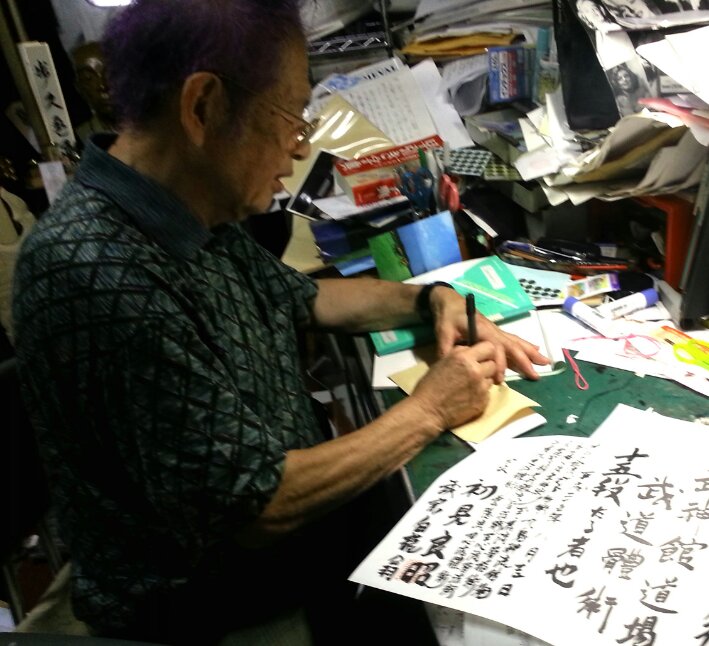
During the last class, sensei wrote a calligraphy (see picture) saying: 無心 無光, Mushin Mukô (no thinking, no form). It reminded me of Musashi’s 得光, 無光, Ukô Mukô, (with form, without form). Musashi explains that the concept of Kamae is complex as it mixes both the physical and the mental attitudes. He said that Kamae is “not only a physical stance, but varies according to situation, like the shape of water in various vessels. The physical kamae is like a castle but needs a capable Lord within”. I like this image.

Sensei’s Budô is formless and this is what gives it so much power and that is triggering our creativity. There are no preconceived action and no intention. But this is a very high level of expertise and not so many Bujinkan practitioners can even grasp the idea. Needless to say can do it.
In order to reach this level, one must first master the basics and the various Bujinkan fighting systems. This ability of Mushin Mukô appears when your saino konki develops itself enough within the Juppô Sesshô.

Juppô Sesshô by essence cannot tolerate forms nor shapes as it is a natural reaction to a mienai (invisible) situation. Forms and shapes gives you away and might reveal your intentions to the opponent. If you are able to be Mushin Mukô in the fight your body will simply react with adequacy . The outcome is not important. You move naturally, simply surfing the waves of intention of your opponent.

This is why I consider the study of the Tsurugi to be so interesting. The Tsurugi becomes alive because you have mastered the traditional “modern” forms of sword fighting (in the Bujinkan they are to be studied in the kukishin, the togakure, the shotô, the tachi).

Strangely we use an old weapon fighting system through the understanding of its modern evolution. Remember that the Tsurugi has been in use until nearly the end of the Heian Jidai (794–1185)*. Which means that Tsurugi techniques have been used for at least 35 centuries (including China). Comparatively the Tachi and then the katana have been in use for less than 8 centuries of actual warfare (10th to 18th c).

But as sensei explained the written techniques have disappeared (bamboo blades and paper didn’t make it through time) and only the body can recreate the techniques. Now as the Tsurugi created the tachi and the tachi created the katana, then by learning the relatively “modern” ways of tachi and katana, can we rediscover the old fighting experience of our ancestors. I write “ancestors” because the whole world: the Indians, the Romans, the Greeks and the Vikings used the same straight type of blade.

By showing the Tsurugi this year Hatsumi sensei had given us the best tool to get rid of the form. Fighting is about surviving not about looking good. If you know the forms good enough then the Tsurugi will free your taijutsu. But sensei prepared us for this. We studied the sword b going back into time: first ith the Kukishin biken jutsu, then the shotô**, then the togakure sword, then the tachi***. In fact we have been studying sword from modern times going back into the Tsurugi period.

Once understood this concept of 無心 無光, Mushin Mukô (no thinking, no form) with the sword, you can apply it to any type of fighting from taijutsu to any weapon. This is why the Tsurugi is so difficult to understand.

And this is the beauty of the Juppô Sesshô of the Bujinkan martial arts taught by Hatsumi sensei.

__________________________________
* Middle Heian – Early Kamakura Period (9th – Middle 12th C.)    An important step in the construction of sword was taken when Japanese swordsmiths came to produce a curved-blade of Shinogi-zukuri, that is considered to have innovated from the experience of wars occurred in succession at the turn of the 10th century. The swords of this age are marked with gracefulness. The shape is slender with strong Koshi-zori (waist-curve), the foible curving inward, and the blade tapers toward the Kissaki with the ratio of width of the ricasso (the base of the blade) to that of the top is as 10 to 5.5 or 6, proving to be an effective weapon to make a blow and to aim toward enemy’s throat from the horseback. In appreciation, those features, needless to say, added effect of beauty on sword as artistic asset. From http://www.shibuiswords.com/historynihonto.htm

* * for those interested, when we studied the shotô in 2003, sensei said that these techniques were coming from a fighting system of the Muromachi period that specialized in small swords to fight the huge tachi in use at this time. In this Ryû, they would carry the shotô on the thigh like a tachi (cutting edge down) with the same type of mounting. I am sorry but I don’t remember the name of the Ryû (it is not one if the 9 schools).

*** for those interested, I will give a one week seminar mid August and we will study all the sword techniques from the Bujinkan: kukishin biken, togakure biken, shotô jutsu, tachi waza, and Tsurugi. You can see all the details at http://bujinacademy.isteaching.com/shugyo-seminar-summer-2013.html

Kagirinai no Gaku Jutsu


image

Gaku jutsu 学習 is the science of learning or study. And the Bujinkan requires 限り無い の 学習 kagirinai no gaku jutsu, an endless study.

Today at the honbu we were lucky Noguchi sensei gave the two classes as Sôke was busy. In these classes we studied some of the Takagi Yôshin Ryû and the Kukishinden Ryû and we covered many techniques from the various levels of the ryûha, namely: moguri gata, mutô dori, and shoden no Kata. With my partners Alfonso (from Spain) and then Mundo (from Mexico), we did our best to follow the crazy rhythm of teaching of Noguchi sensei. And the extreme heat didn’t help.You would think that all these are known by all of us by now. And it would be untrue.

Noguchi sensei has been teaching at the Honbu since the beginning and he is one of the oldest student of Hatsumi sensei. But it is always a pleasure to see him prepare a technique. His classes always follow the same ritual. He places his notebook by sensei’s door on a stool and studies the text for a few minutes before demonstrating it to us. It is like he is discovering the waza for the first time, and to me this is the true gaku jutsu.Each time he comes up with a new version of the techniques. I have been studying under him for nearly twenty five years now, and I’m always surprised to rediscover these waza as if they were new ones. In fact,when Noguchi sensei reads the text thoroughly he reinvent it completely.After so many years with Hatsumi sensei, one can expect the Japanese Shihan to “know ” the techniques. That would be wrong. They are students. Very advanced ones, but they are still learning and studying. I wondered many times about this and my conclusion is that they don’t learn the waza by heart in order to keep the freshness of creativity. These is what studying is about.

Recently at the Paris Taikai, my friend Sven said that:  “we learn and study in the dôjô with the teacher, and then we train “. This is the way the Shihan do their training, they teach new possibilities each time.I have been studying these same techniques with him many times. I trained them a lot to the point that I even committed dvd’s on these techniques. I taught them in many seminars over the planet, but when I’m studying  in Japan, it is as if the techniques are new to me and I feel lost like a real beginner. This is how gaku jutsu works.This is why I call what we so here in the Bujinkan the kagirinai no gaku jutsu, the endless study. There is no definitive answer. Waza are not chiseled in granite, they are ideas to be interpreted anew each time you study them.This is possible in Japanese because the Japanese language processes with images and not with defined objects as we do in our western languages. So please take some liberties with the texts you have gathered over the years if you want to save your creativity. Don’t do your own thing. Each waza carries within some kaname not to be discarded. But keeping those essential points feel free to adjust the form to the feeling of the day and/or the theme of the year.

This is the same with sensei ‘s books and dvds! And you are surprised to discover it when you have the chance to record a Quest dvd with sensei, because this is exactly the same creative process. We meet usually at the honbu dôjô and we are given a technique to demonstrate. Each one trains and, when asked by sensei, we show our interpretation of it (trying to stick as close as possible to the form demonstrated to us). Then sensei simply does a henka on what we just did. Many Bujinkan followers think that these dvds represent the “correct form “. It’s wrong, they are only sensei’s feeling of the moment. When he was traveling the world, sensei would give more or less the same techniques at each Taikai and when you were lucky to follow his “world tour ” you would study them each time with a different approach. In 1997, I studied the first technique differently in Paris, New Jersey, Barcelona, and Tokyo!This originality of the Bujinkan martial arts is what makes it so valuable compared to the other arts. It also explains why each Shihan teaches these same techniques with a total different approach. One day I asked Sôke if it was logical to think that when in Japan I had the impression to study the Bujinkan with him, but also the Nagato Ryû, the Oguri Ryû, the Senô Ryû, and the Noguchi Ryû? “Yes! ” was his answer.

Our richness lies in the diversity of our interpretations. Our unity is based upon our diversity.  For example if five persons are asked to draw the same tree, you will have five different visions of the same reality. But each tree will have roots in the ground, a trunk, and branches. It is the same with the waza. Like true artists, we express what we are in the instant.

Do not kill the techniques by forcing them into a dead form, on the contrary read them each time as if they were new and interpret them to the best of your ability. Saino konki.