
 For the last 10 or more years (I don’t remember exactly) the Bujinkan France is inviting Sveneric Bogsater to the first seminar of the year.
I hope that you will join us this year!
AJC
For the last 10 or more years (I don’t remember exactly) the Bujinkan France is inviting Sveneric Bogsater to the first seminar of the year.
I hope that you will join us this year!
AJC
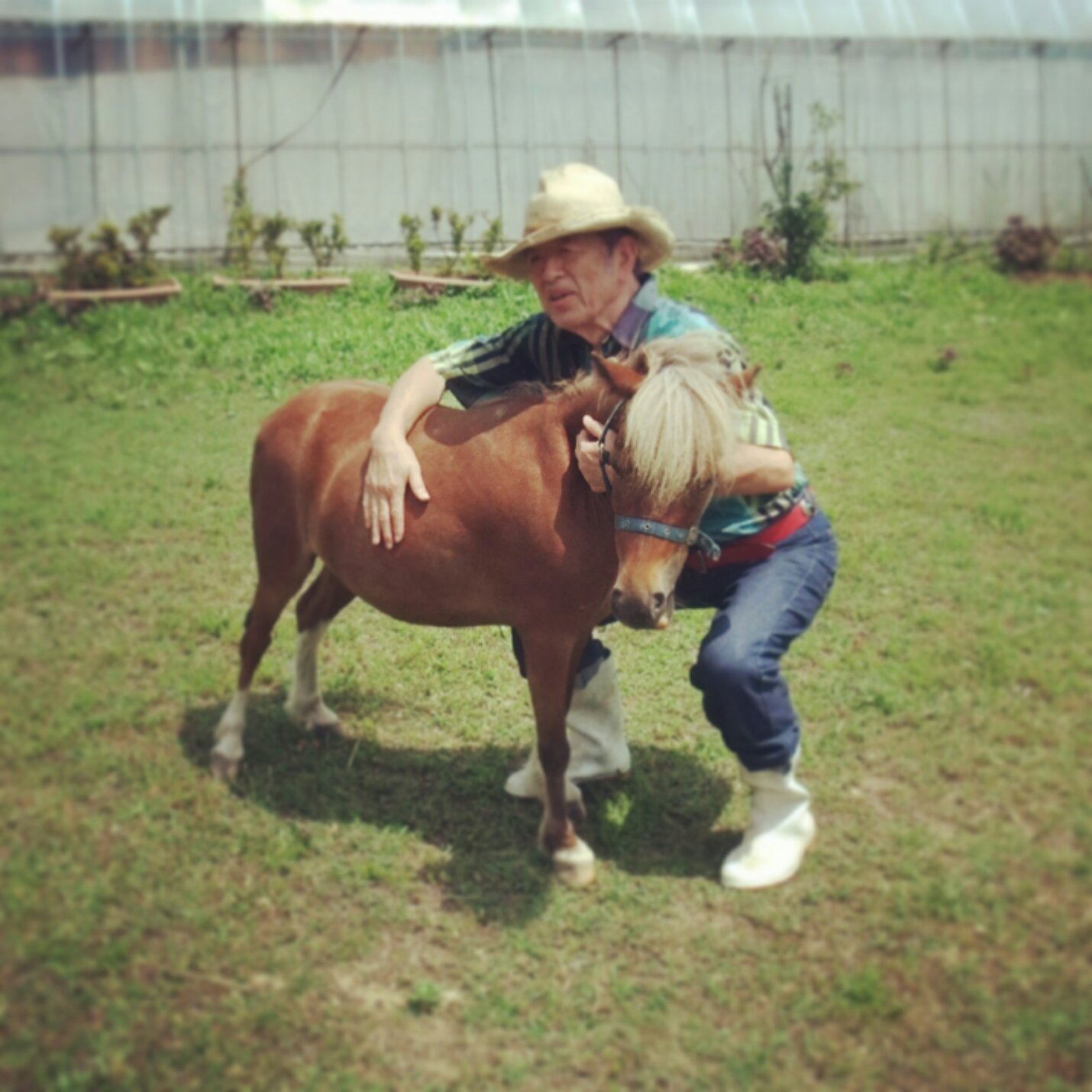
Be ready for a galloping year of the horse where things might not be as they look like in this Japanese proverb:
“Ningen banji saiou ga uma” is one of the Japanese proverbs. The literal translation is “All human affairs are like Saiou’s horse”. It means, “One can never know what will prove to be lucky or unlucky”. The meaning came from a Chinese folk tale about an old man called Sai. ( “~ ou”, also read as okina, means “old man”.) Here is the story.
Once upon a time, an old man, Sai, lived near the Chinese Northern Fort. One day his horse ran away. His neighbors commiserated with him over his misfortune, but Sai said “How do you know this is not really good luck?”. A few days later the horse returned, bringing another horse with it. However when his neighbors congratulated him on his good luck, the old man said “How do you know this is really good luck?” Sure enough, some while later Sai’s son fell while riding the horse, and broke his leg. However this turned out to be good fortune when all the young men of the village were ordered to join the Emperor’s army. Sai’s son didn’t have to go since he had a broken leg.
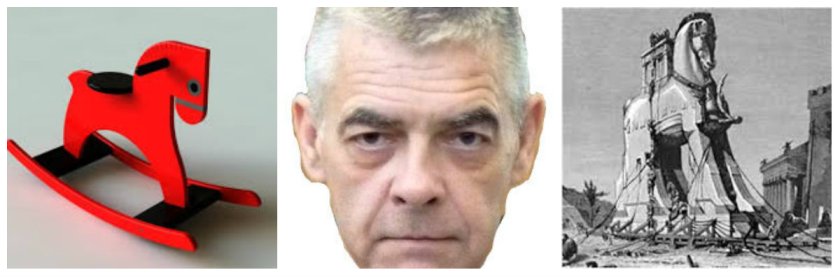
This is the year of the horse of wood but hopefully not the “wooden horse”. The horse toy goes nowhere; and the Trojan one is a trap!
Let’s hope that this year will help us understand “Kachimushi”
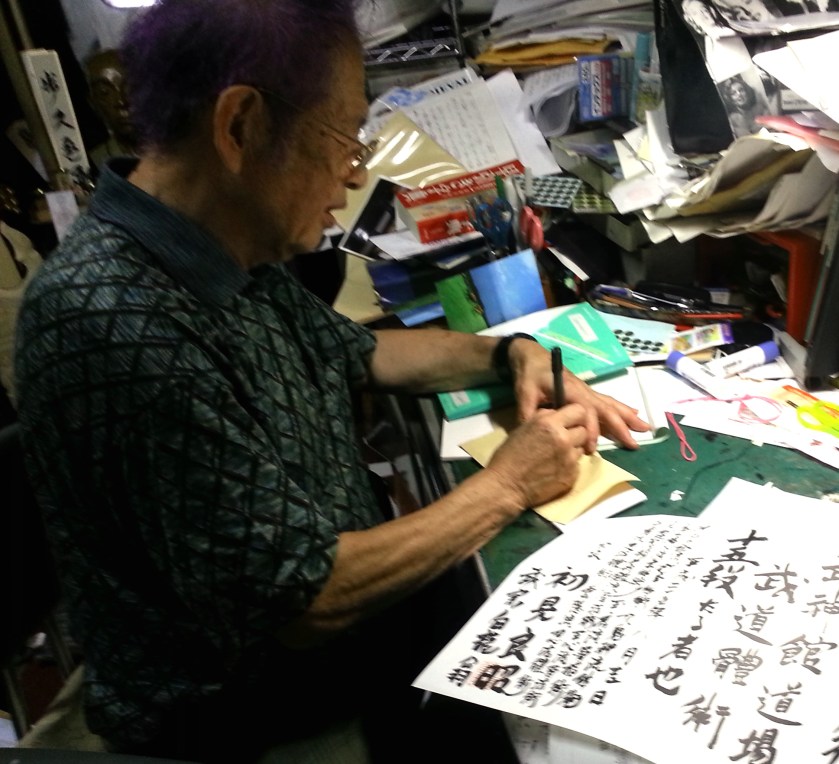
As the Bujinkan is getting bigger, I understood that there might be a Bujinkan Office working full time in 2014. Maybe is it related with the opening of the new Honbu dôjô in April. We have to be patient a little longer, sensei begins to teach mid January.

“A system of morality which is based on relative emotional values is a mere illusion, a thoroughly vulgar conception which has nothing sound in it and nothing true”.
Plato
Asian philosophies (and many others) have taught us that the world in which we live is not “reality”, that it is “illusion”. And we’ve all accepted it, thinking: “if those clever Asian guys said it so long ago, it must be true”. But is it really true? And here, Plato, who wasn’t really from Asia, helps us understand it better.
The “relative emotional values” (REV) he is referring to are created by ourselves (brain, education, ego) and these REV, in fact, act like shields preventing us from seeing clearly was we have in front of us. It is because we are unable to see correctly with the 心神心眼, shinshin shingan (the eyes and the mind of the gods) that we are stuck in the world of illusion*.
The first problem is that people have accepted this and are happy with it, not trying to see beyond the veil. They know it is wrong but they are too lazy to even try to change it. This is the same in the dôjô, where many come from an illusion of what ninjutsu is and once taught properly stay or leave the dôjô because they do not want to change their initial wrong vision.
The second problem is the concept of “morality”. And the main issue is that the concept of morality bears many definitions** if it refers to onself, the group/family, the city, the country, etc. But whatever morality is, is it still morality when based upon emotions? No.
Our emotions are flawed and make us see things different from what they are. Therefore when morality derives from emotions that are based upon our inability to see reality; what we obtain is a “system of morality” that is not able to provide us with the tools to survive in the real world. The Chinese were the first to understand the difference between theory and praxis. Apparently this system of morality is only theoretical and not at all practical.
So I would rephrase Plato’s sentence and say instead: “A system of morality which is based on relative emotional values defines a theoretical reality, and a practical illusion”.
We do not live in 幻覚の世界, genkaku no sekai (the world of illusion) but in 現実の世界, genjitsu no sekai (the world of reality). The Bujinkan is an art based solely on practical reality.
* This is the blue pill/red pill of the Matrix movies
**http://en.wikipedia.org/wiki/Morality
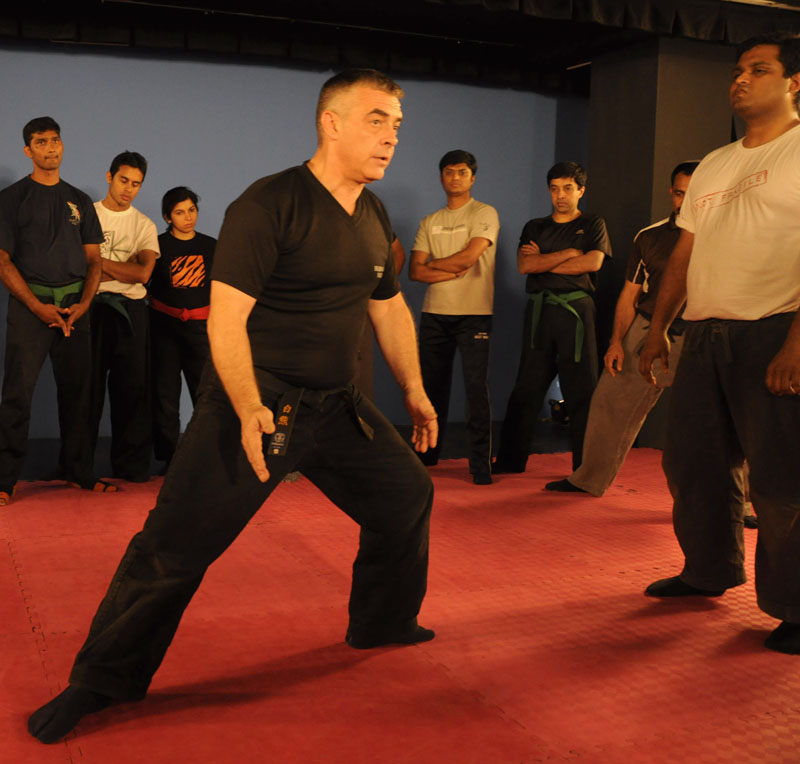
I teach all over the world so I finally decided to regroup all the information you need if you want to join me for a seminar and fantastic Budô moments.
Click on the picture and you will go straight to the website.
I hope to see you soon in 2014
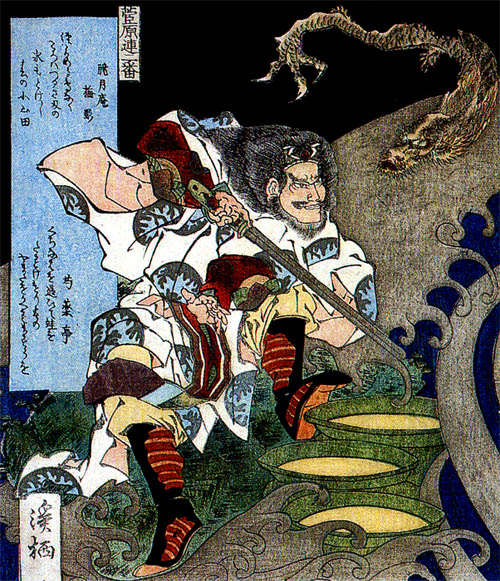
This is Susanô who retrieved the original Kusanagi no Tsurugi from the tail of the hydra and gave it to his sister, who gave it later to Ninigi no Mikoto the first “godsend” ruler of Japan. This Tsurugi with the mirror and the jewel are the three regalia proving the divine mandate given to him. They are the symbol of the Imperial rule over Japan.
Ninigi’s great-grandson Jimmu, was to become the first Emperor.
 I do not speak Japanese but I love to “understand” the meaning of Japanese kanji.
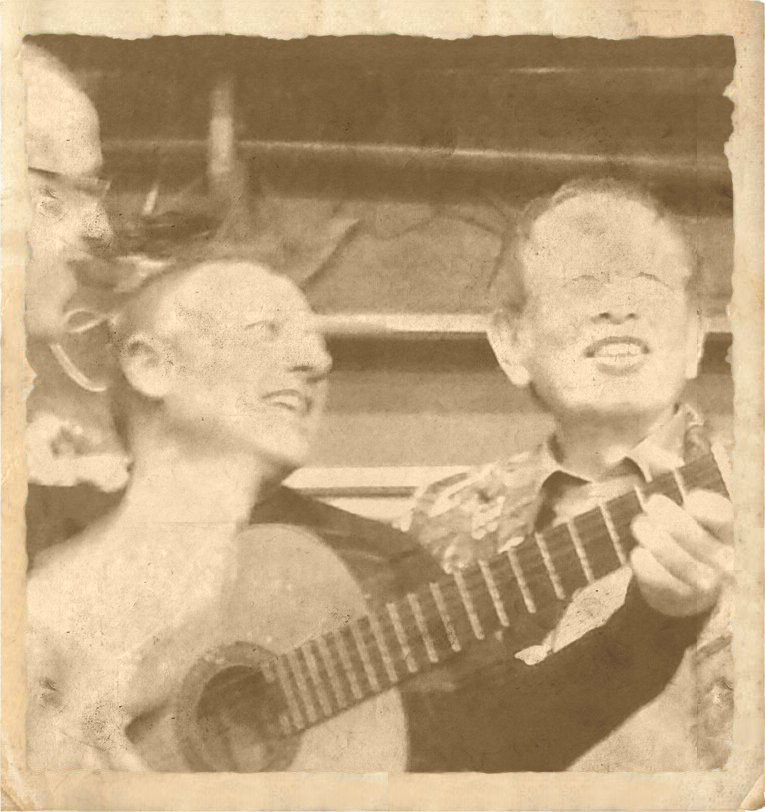 In Japanese 心得 knowledge is kokoroe. Interestingly it is made up of two kanji 心, “shin” which is kokoro (heart, mind) and 得, “u” that has the meaning of: to get; to acquire; to obtain; to earn; to win; to gain; to secure.
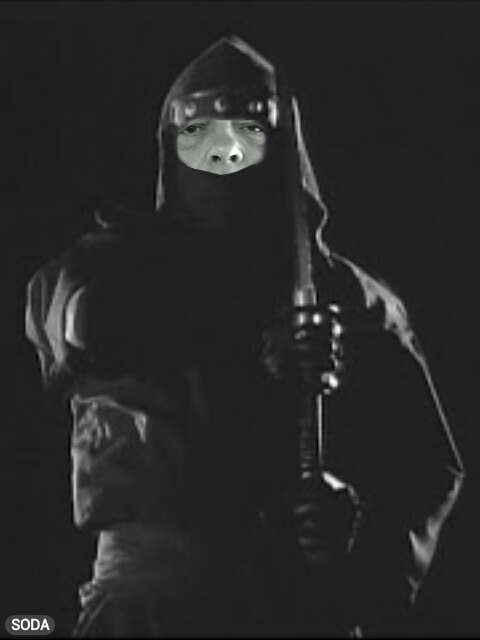
Wearing the ninja outfit doesn’t give you the abilities. The Omote side is nothing compared to the Ura side of reality. Too many of us forget that 幻想 Gensô Is illusion. This is the same as in Genjutsu, and the essence of Gen jutsu, for me, lies in 虚辞 kyojitsu. And remember that kyojitsu is the backbone of the bujinkan. 虚実皮膜, “the difference between truth and fiction in art being very subtle, Art abides in a realm that is neither truth nor fiction”.
 Shiro Kuma