

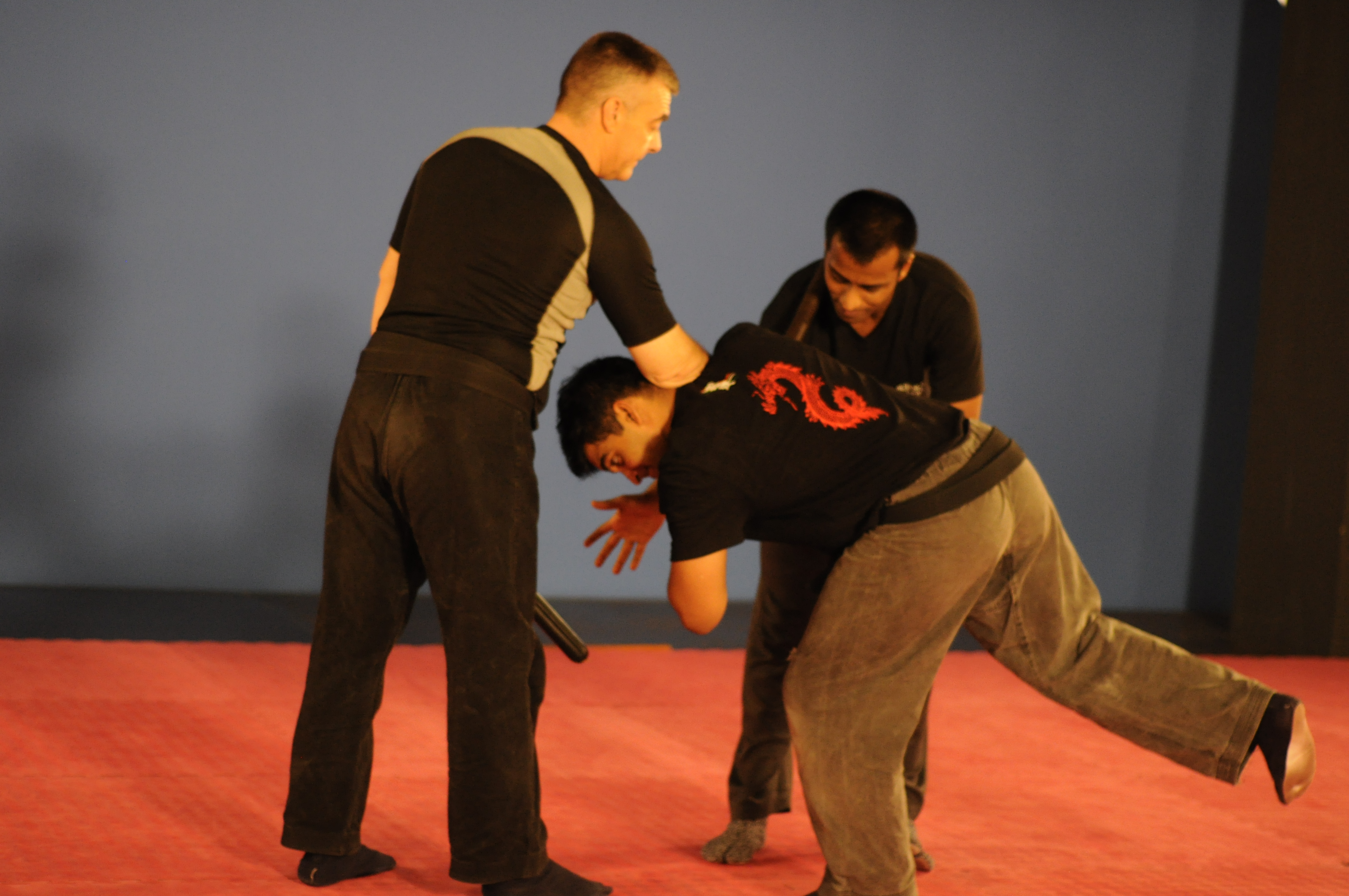
 Please visit the tenchijin University website, only a few days to register (for security reasons as we train in a military facility).
Tenchijin University website HERE
Information and prebooking HERE
Paris October 23rd – 27th
Give yourself a chance to excel!
Online registration is now available HERE
Please note that this seminar being held in a military facility in Vincennes, quick registration is required to issue the security pass giving access to the dôjô.
Namaste,
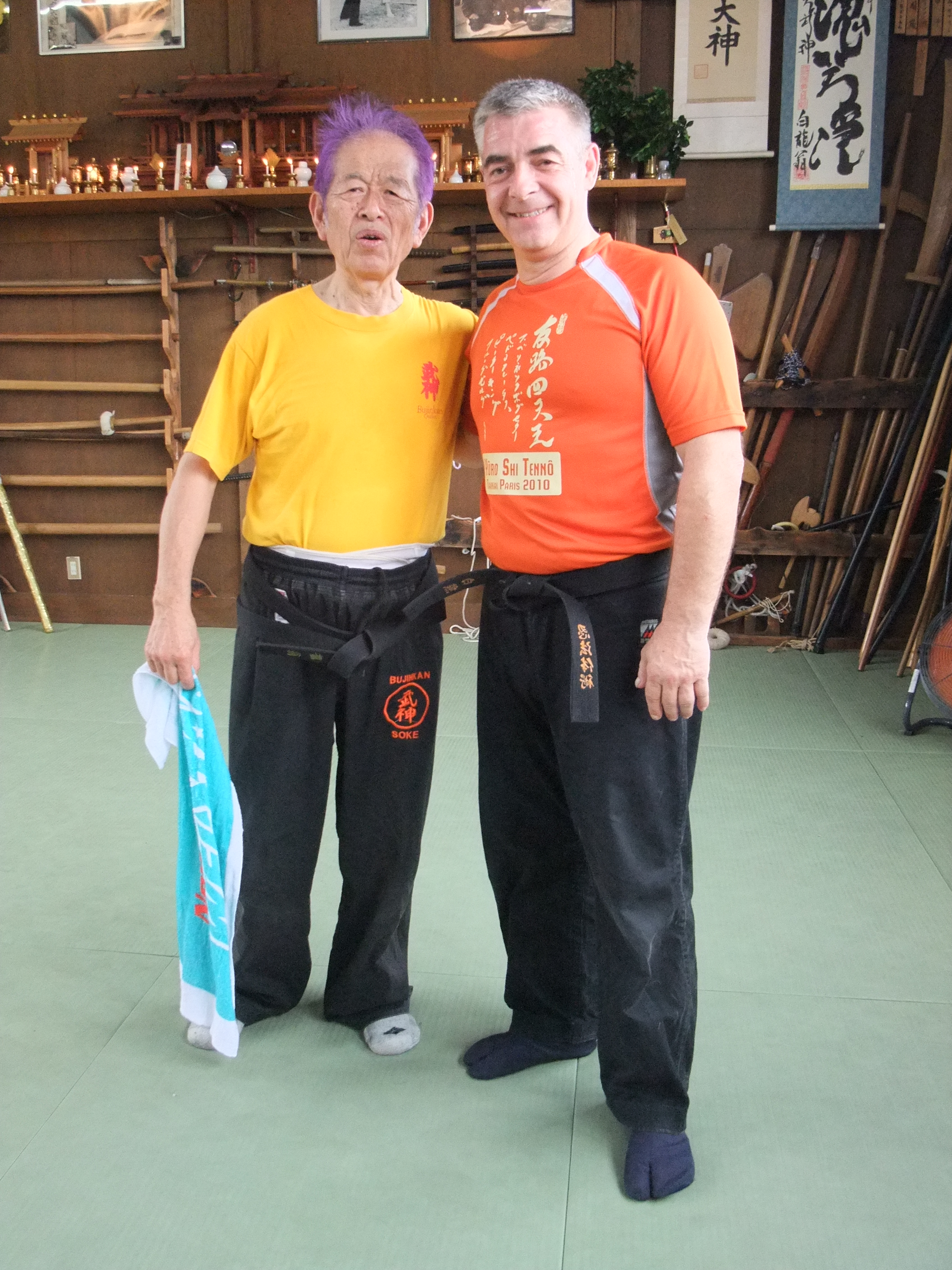
I arrived yesterday in Bangalore to give two seminars. The monsoon is finished and the weather is cloudy but nice. This is a big change compared to my last trip here in June.
Our Indian Buyu are improving and developing fast. They have received Darren recently and Robin will be visiting them next November.
The first one begins tomorrow and will be covering the Gyokko Ryû Kosshi Jutsu. Te Gyokko ryû is a fantastic fighting system that apparently is theorigin of all Budô in Japan (cf. “Unarmed fighting techniques of the Samurai” by Hatsumi Sensei). Distancing and the structure of the school are brilliant!
The second seminar will cover the Yari Jutsu from the Kukishinden Ryû with the Kaeshi Waza. I really love the Yari because of its powerful thrusts and versatility. After the Bô Jutsu “marathon” of June, the participants are ready to move up to the next level.
These two seminars will be recorded and will be available soon on budomart and on koi.
DVDS: The first level of Gyokko Ryû and another one on Nawa Jutsu will be soon available. Unfortunately, the bô jutsu of the Kukishin Ryû will not be ready in time before I leave. For your information, the Bô jutsu after cleaning is 20 hours long of raw material; it should cover around 10 dvds!
It should be ready for Christmas so now you know what to ask Santa.
Be Happy!

Thank you for your enthusiasm concerning koimartialart.
Since December we improved a lot our website thanks to your feedbacks. Please continue to send them to us! Our success is your success and proves without any doubt that we were right to do launch this new adventure. Thank you for your unlimited support.
In August we have completely redesigned the user’s interface making it more user firendly.
We also changed our provider and the general outlook of KOI. The search mode is faster as well as the streaming. Check it by watching the new trailers now.
Many new titles are now online including all the basics on buki waza: tantô, kunai, shotô, hanbô, jo, biken, bô, yari, naginata. Did you ever dream of winning against the bô, the yari or the jo? Many of them are also demonstrated with the kaeshi waza (counter techniques).
We have also modified our different offers and you can now adapt your video hunger to the “basic”, the “silver koi” or the “gold koi“.
Please visit the new www.koimartialart.com website and tell us what you think.
Visit it today and get ONE WEEK FREE of unlimited videos!
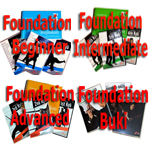 After the last article on foundation of taijutsu I redesigned the budomart website accordingly.
Please visit it and discover the new foundation series.
4 sets covering 612 techniques, 26 dvds, more than 22 hours of videos.

The quality of our taijutsu depends on strong foundations. But what does taijutsu and foundation really mean?
Taijutsu is often understood as the sole body movement but when you are used to Hatsumi sensei’s vision of life it is always interesting to dig a little deeper and see what the word(s) really encompass it is necessary to review the various writings and meanings of the words.
First 術 jutsu is either art, means, or technique as we know but this is with the various meanings of tai that we have subtle changes in the understanding of the word taijutsu. But when you look at the three meaning of “tai” you discover that they can be applied to your training.
体, tai has 3 main meanings: 1: body; physique; posture. 2: shape; form; style. 3: substance; identity; reality. Taijutsu is a jutsu done with the body that goes from the pure omote (body) to enter the world of ura (reality). This is integrating the taigamae (体構え) and the kokorogamae (心構え). This is a self centered taijutsu.
対, this other tai expands our understanding of taijutsu by precising that it is also: 1: opposite; opposition. 2: versus; vs. 3: equal footing; equal terms. 4: against …; anti-. This new taijutsu is expanding and adds the idea of fighting the enemy and to balance the forces of the opponent. Now we are into the man to man fight.
隊, this last one means: party; company; body (of troops); or corps. Now taijutsu expands again and includes the idea of army fighting and to interact with our friends and our enemies.
The interesting thing here is that by digging through the various understanding of “tai” we moved from the apprentice training where we are alone; to the encounter with a single opponent; to the battlefield feeling. So taijutsu a general system to prepare our bodies and mind to go from the beginner to the advanced level.
Our foundations are based on the quality of the basics that we learn alone and then with a partner through years of training. Taijutsu help us to grow from the omote to finally reach the essence of the ura. In Japanese 大本 is the kanji for foundation. It reads either “taihon” (taihen?) or “ômote” (omote?). Maybe this is how we must understand sensei when he speaks of 実践 jissen (practice; practise; put into practice) and 実戦 jissen (combat; actual fighting).
On a practical aspect we have to keep in mind what sensei has repeated many times concerning the densho. “densho are for kids (beginners)” as techniques have to be taught step by step. Historically the young samurai would begin his warrior training at around 10 years of age and at 15 years of age would become an adult and be allowed to go to the battlefield. In fact, the 15 ranks in the bujinkan were created by sensei also to symbolize this. When you begin you are a beginner and then after many years you reach adulthood and become responsible of your own actions, you are jûgodan. But without good basics your taijutsu will lack credibility. Therefore our training in the three tai defined earlier will guide us in our mastering of taijutsu. We will move gradually from taijutsu (体術) to taijutsu (隊術) which included the use of yoroi and weapons. The first tai (body) is the modern translation for the word but in the past tai encompassed also the mind, the weapons and the yoroi. If you think about it, it is quite logical. As we said earlier, young samurai (mostly kids) were not able to understand the subtleties of high level techniques including weapons. So in order to keep it K.I.S.S. (Keep It Simple & Stupid) the trainers striped the techniques off the weapons and began to teach unarmed combat only. This is why we begin our training with unarmed combat. On the battlefield warriors would always carry weapons and unarmed combat would be rarely used.
The foundation of our taijutsu is a set of basics acquired in unarmed combat and regrouped by sensei in the tenchijin ryaku no maki in 1983. Once mastered, unarmed taijutsu is completed with all the usual weapons of the samurai and the yoroi to create a natural flow of movement.
This is why taijutsu (体術) is the true foundation of taijutsu (隊術).
The weather is getting smoother so we will not sweat as much as last year!
There are still a few places left for the summer camp which begins on the 21st of August
If you are interested read all about it at the JSC2010 website.
Be happy!

Next week-end sensei will not teach because of the Obon, a Buddhist ceremony of filial piety in honor of the ancestors of one’s family.
This ceremony is held around mid August (it depends on the region of Japan and/or of the calendar in use solar or lunar) and is based on the Ullambana Sutra, one of the Sutra of the Mahayana Buddhism.
What I find interesting here comes from a discussion I had the other day with Senô sensei before the class took place.
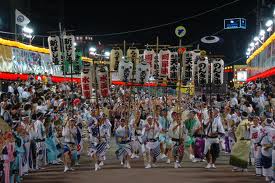
The Obon (or Bon) is a very important time for the Japanese people as this is a time where the spirits are there. It ends with the famous paper lanterns floating downstream and symbolizing the souls of the deads going back to their own world.
Even though the Obon is not a holiday, it is a custom to let the people honor their ancestors and not work on these days.
Honoring your ancestors, and filial piety are linked to the bujinkan in many aspects.
When I was speaking with Senô sensei he used many times the word yûgen when speaking of the souls of the deceased; and also of the sanjigen (the third dimension).
And these two concepts were the ones we studied respectively in 2004 and 2003 whe nwe entered the world (sekai) of juppô sesshô. When those concepts were taught by Hatsumi sensei we had no clue about their meaning and they looked like some esoteric concepts far from our concern.
After all we come to Japan to train fighting techniques, no?
In fact all through these last years Hatsumi sensei has been teaching us more than techniques, he has shown us the Japanese culture and shared with us his vision of the world as a Japanese.
Without his very special way of teaching we would still be excluded from this world of understanding and our improvement in the bujinkan arts would be limited. This way of teaching made us go from childhood to adulthood without knowing it.
Another interesting link to the bujinkan is the term sôke because its chinese origin (Mandarin Zongjia) conveys “strong familial and religious connotations. Etymologically it represents a family performing ancestor rites”.
As always there are various meanings but one interests us more as the “sôke is the one responsible for maintaining the ancestral temple on behalf of the entire clan organization. In Japanese texts, sôke always implied a familial relationship replete with filial duty (but) the Japanese use of this word is not limited to consanguineous contexts” (from William Bodiford, UCLA).
“Bujin” in Chinese is “Wusen” which is, as you know one of the nicknames given by the Chinese to Takamatsu sensei. Therefore the bujinkan is the “house of Takamatsu sensei.

And this explains why Hatsumi sensei is using this specific term od sôke which is rarely used in the martial arts world. In fact, in my understanding Hatsumi sensei sees himself as the “son/heir” of Takamatsu sensei and he has developed the bujinkan in order to revere his memory.
The other day when we went to sensei’s second house in Tsukuba we performed a ceremony in memory of Takamatsu sensei and we were asked by sensei to put incense sticks on his memorial. The love and respect of Hatsumi sensei towards Takamatsu sensei is obvious when you watch the dvd “Takamatsu Toshitsugu, the last ninja”.
So if you are now in Japan do not be too sad if you have no training on Friday and Sunday because the spirit of Takamatsu sensei will be there with you for the whole week-end.
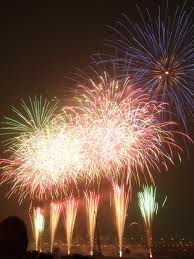
Share with the Japanese the joy of these two days where obori (obon dancing), fireworks and matsuri are held, and on Sunday night go to river outside of Noda and watch those beautiful paper lanterns going down the river to reach the sea.
Be happy!
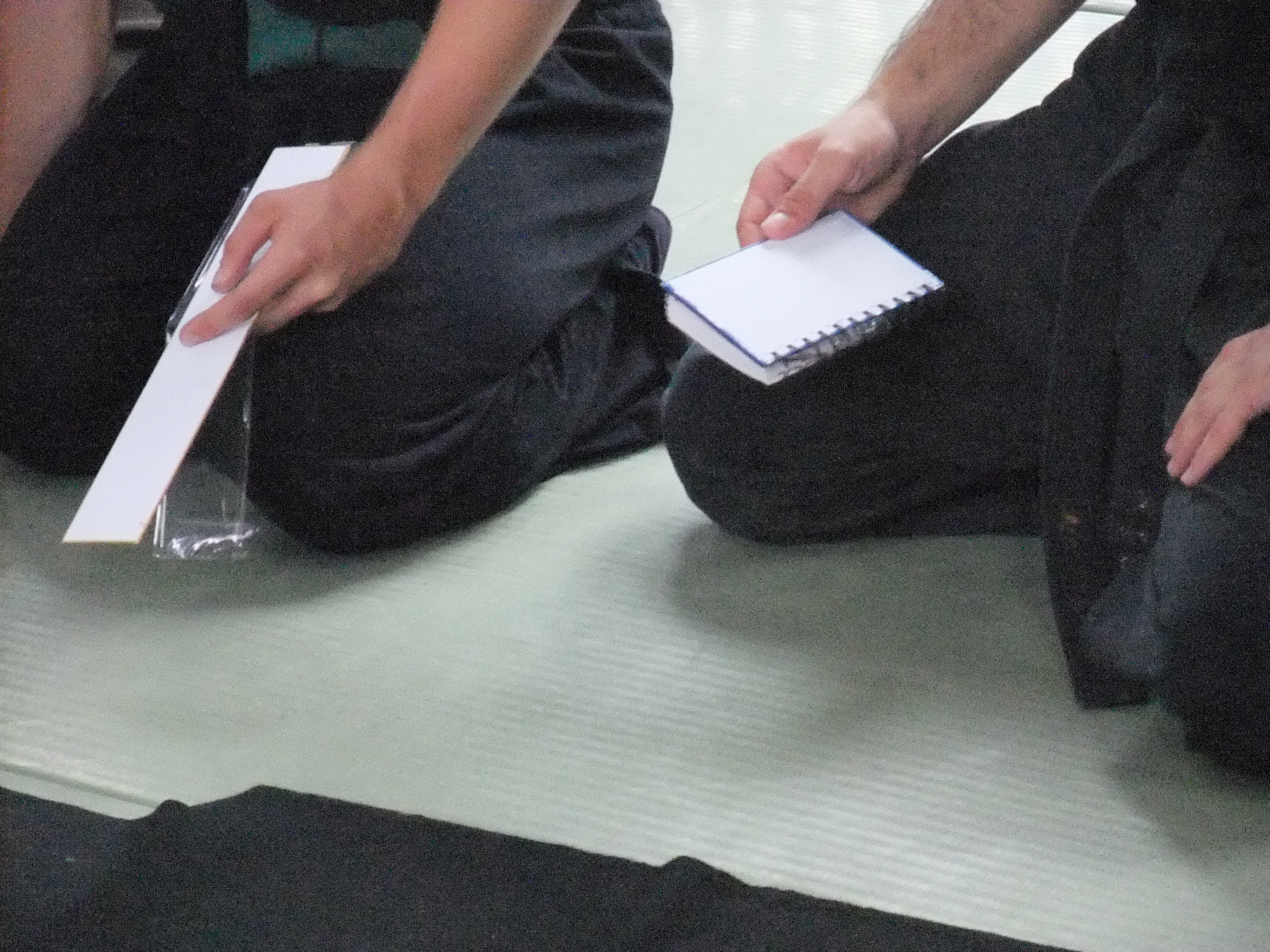
Whenever we are waiting or listening we naturally put ourselves in seiza no kamae. Over the years, this kamae has been assimilated and we do it without thinking. This is the objective we should have for every movement we learn in the dôjô; i.e. being able to do everything without thinking. By forgetting the self we forget the form and the flow is born.
One day I went with a buyu to attend a sadô seminar of the ura senke school in a Zen Rinzai monastery.
Even though we had explained to the superior priest and the sadô sensei that we were martial artists, our natural way of walking, kneeling, and standing was so natural that they suspected us from being sent by the Zen headquarters in Japan to check on them! Luckily we were not trying to infiltrate them like ninja.
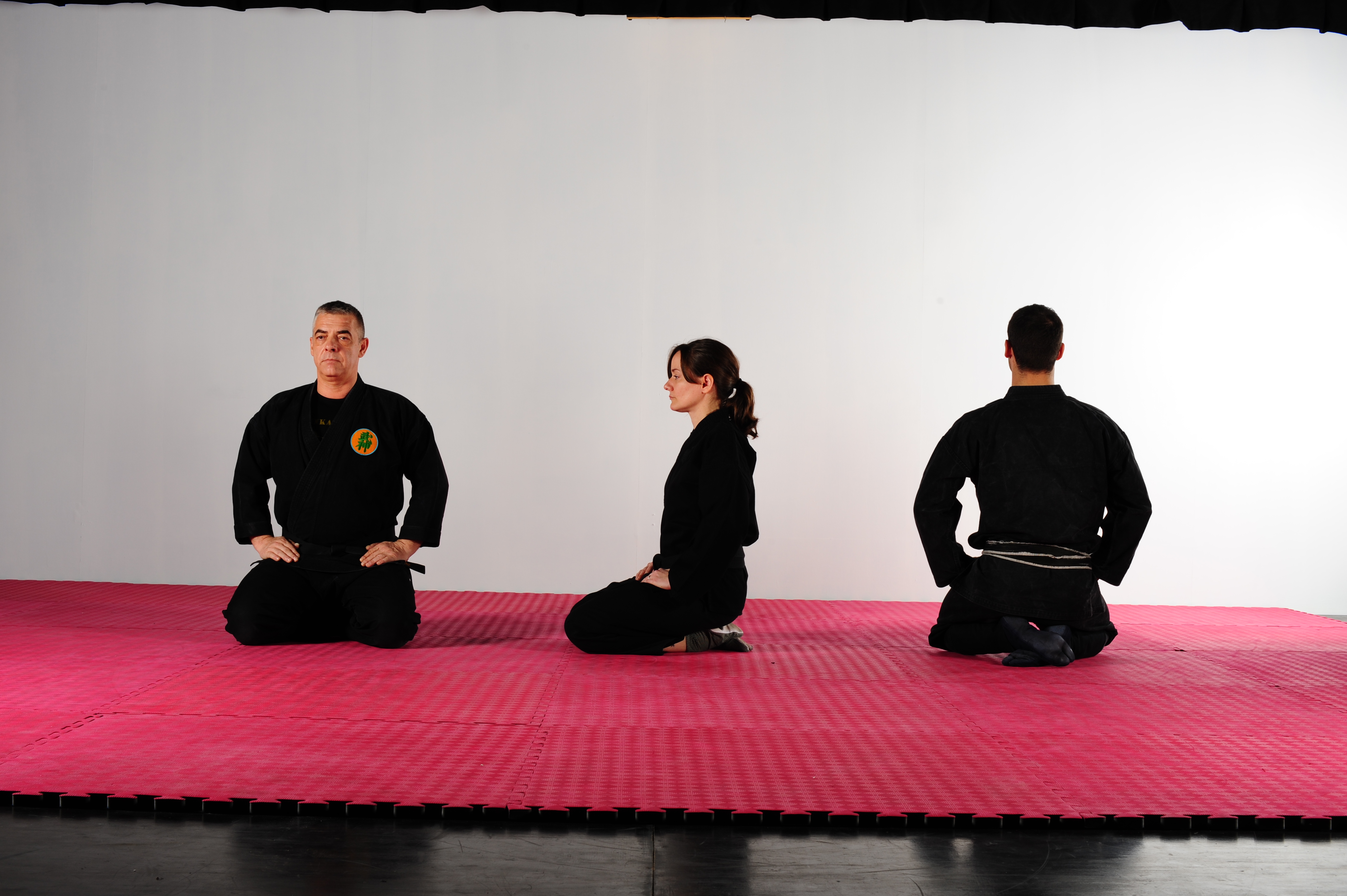
The seiza 正座 or 正坐 (kneeling with the tops of the feet flat over the floor, and sitting on the soles) or the seiza 静座 or 静坐 (sitting calmly and quietly in order to meditate) are the same but differ in their meaning; the tai gamae (体構え) is the same not the kokoro gamae (心構え).
The first set of seiza is the one used in court when the samurai deserted the battlefields and the yoroi and began to live in the palaces. This is why one of the meaning of 正 is “righteous”. The second half being either 座 or 坐 and meaning respectively “cushion, seat, and “to sit”. From this we understand that seiza has the meaning of using the correct form of sitting 1) in general; 2) with a superior. It deals with the omote (表)

The second set of seiza is the one used in the temples for meditative purpose. The meaning of 静 is quiet, calm. Therefore “sitting quietly” can be done with or without a zafû (座蒲 or 坐蒲) and can be done even in fudôza (不動座). It deals with the ura (裏).
Technical tip: the left foot is on top of the tight foot to be able to draw rapidly the sword or to move from seiza to fudôza. Train these kamae.




 Shiro Kuma